 Softwavz
L
O
A
D
I
N
G
Softwavz



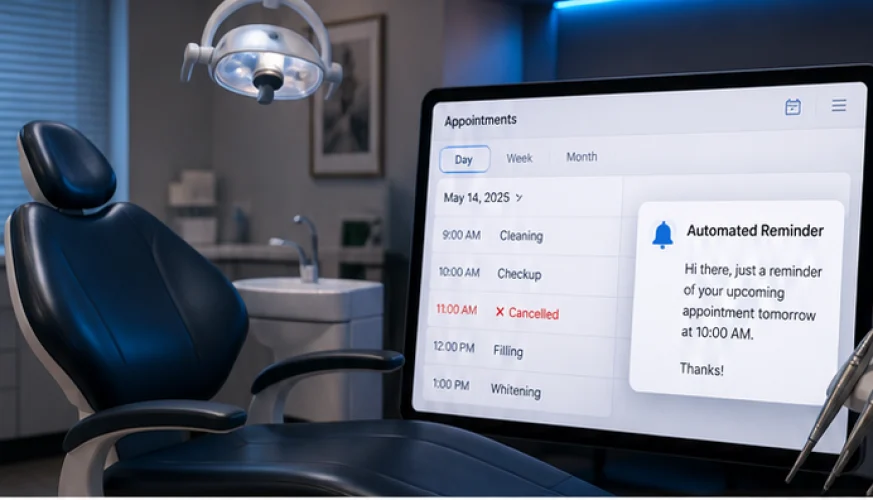
The cancellation is not the problem. The unfilled hour that follows it is.
Every practice loses appointments. People fall ill, cars break down, children need collecting. Chasing that to zero is not realistic and the effort is better spent elsewhere.
What is avoidable is the hour of clinical capacity that then goes unused, in a diary that had a waiting list. That is the part software should handle, and mostly does not.
Reminders are worth sending, but their real value is timing. A patient who cancels three days out costs almost nothing, because the slot can be refilled. The same cancellation an hour before is unrecoverable.
So the useful measure is not how many cancellations you had — it is how much notice you got. Reminders sent early enough to prompt an honest "I cannot make that" are more valuable than ones sent the night before, which mostly reduce silent no-shows.
Most systems have a waitlist. Almost nobody uses it, because using it means someone at reception noticing the gap, opening the list, and phoning down it between other jobs. At four o'clock on a busy day that will not happen.
It works when the system does it: a cancellation triggers an offer to the patients who match that slot, by the channel they prefer, and the first to accept takes it. Reception finds out because the diary refilled itself.
A crude waitlist offers the slot to whoever is next. A useful one considers who can realistically attend at ninety minutes' notice, who needs that clinician specifically, and who is overdue for a recall. The right patient for a Tuesday gap is often not the person at the top of the list.
This is also where the recall list stops being a chore. Overdue patients are exactly the people you want in a slot that would otherwise be empty.
Deposits do reduce late cancellation, and they also deter people who are already anxious about attending. We usually suggest applying them narrowly — to long appointments, to high-cost chair time, or to patients with a repeated pattern — rather than as a blanket rule that taxes everyone for the behaviour of a few.
When it is easy to reschedule without penalty, most people reschedule rather than vanish. That is the behaviour you actually want.
Track unfilled clinical hours rather than cancellation count. Cancellations are largely outside your control; the gap afterwards is not, and it is the number that shows up in revenue.
A practice that refills most of its cancellations has effectively solved the problem, whatever its cancellation rate looks like on paper.
The automatic waitlist described here is built into DentalCare Pro, PhysioFlow and EyeCare Pro — a freed slot is matched against patients already waiting for that clinician and treatment, and they are messaged without anyone at the front desk having to remember.
We build the systems behind this — nine of them, running in production. Book a 45-minute walkthrough and we will show you how it works against your own workflow, or tell you honestly if you do not need it yet.


