 Softwavz
L
O
A
D
I
N
G
Softwavz



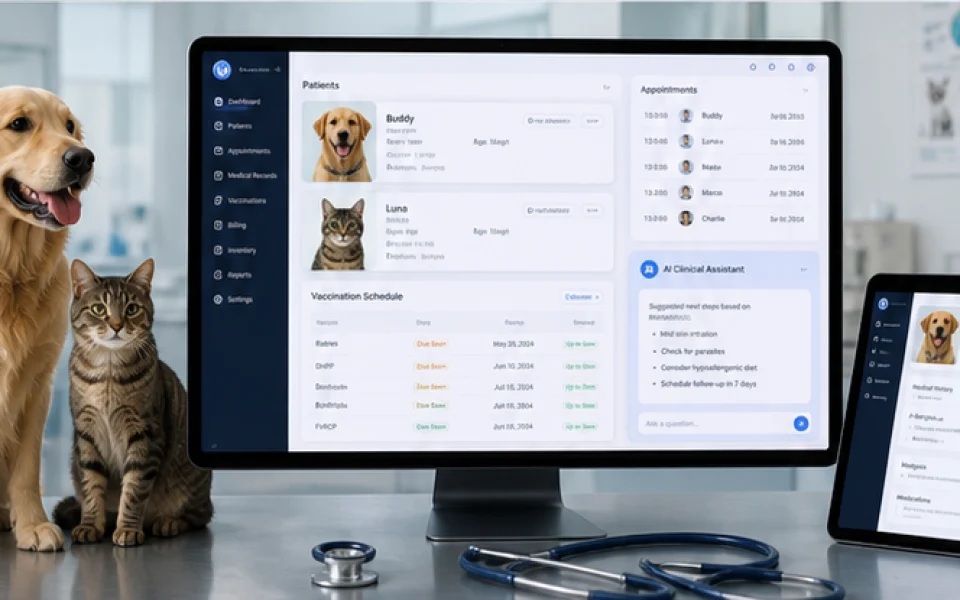
A vet cannot type and palpate an abdomen at the same time. Most practice software is designed as though they can.
Veterinary work has a problem human medicine mostly does not: the patient cannot describe the symptom, the dose depends on a weight that changes, and what is safe for a dog can be toxic to a cat. On top of that sits the paperwork, which lands after the consultation when the next animal is already waiting.
This is one consultation followed through. Every step is a capability described on the AI Vet Pro product page.
Booking runs through a multi-step wizard — veterinarian, slot, reason and clinical notes captured in order, rather than as a name scribbled against a time. The patient is found by fuzzy search on name, ID or owner, so a misspelling does not create a second record for the same animal.
A live triage board shows every animal as scheduled, checked-in or in-consultation, updating in real time. High-priority cases escalate to the whole team, so the question of who cannot wait is answered on a screen rather than by whoever happens to notice.
The record opens as one chronological timeline — every consultation, vaccination and invoice — with species, breed and microchip held as first-class fields rather than notes. Historical weight is tracked, which matters because dosing depends on it.
A known reaction to sulfonamides surfaces before treatment starts, not three clicks into a history nobody has time to open.
The vet dictates hands-free while examining the animal — no keyboard between clinician and patient. The transcription is parsed automatically into Subjective, Objective, Assessment and Plan rather than landing as a wall of text to be tidied later.
Candidate differential diagnoses are surfaced from the symptoms described. The product page is explicit about the boundary here, and it is worth repeating: the AI proposes, the veterinarian decides.
Radiographs, MRI and ultrasound upload straight into the patient's chart. Anomalies are highlighted, the system scores its own confidence in what it has found, and structured radiological findings are appended to the dossier automatically.
The value is not that it replaces a radiologist. It is that the animal is not waiting on an external review before anything happens.
Every prescription is checked before it is issued — against the patient's active medications, known allergies, recorded weight and species.
A conflicting medication raises an alert the moment it is selected. A dose outside the suggested range for a 32 kg animal is flagged. And species-specific toxicity is treated as its own check, because what is safe for a dog is not always safe for a cat. The product page calls this a safety net rather than a substitute, which is the correct framing: the guardrails support clinical judgement, they do not stand in for it.
Consultation notes, imaging findings and prescriptions compile into one branded PDF in a single click — the clinic's logo, colours and legal headers applied automatically, viewable or printable in the browser without a separate viewer.
Owners who leave with a clear record of what was found and what happens next are considerably more likely to follow the plan. Automated booster reminders and QR identification tags handle the part that comes after.
None of this makes the clinical decision. It removes the friction around it — the retyping, the waiting on a second opinion, the dose checked from memory at the end of a long list.
About this walkthrough. This describes how AI Vet Pro works, using a representative example rather than a named client. Every step corresponds to a capability documented on the AI Vet Pro page, and there are no performance figures here because those belong to individual clients rather than to the software.
Book a 45-minute walkthrough and we will open AI Vet Pro live against how your team actually works — or tell you honestly if you do not need it yet.


