 Softwavz
L
O
A
D
I
N
G
Softwavz



A missed filing date is not an inconvenience. It is malpractice risk, and it usually starts as a calendar entry nobody owned.
Most firms lose money in the same three places: admin eating billable hours, time that never gets recorded, and invoices that go out late. Underneath all three is the same cause — client files in folders, hearings in calendars and billing in spreadsheets, with real gaps between them.
This is one matter followed end to end. Every step is a capability described on the Advocate Pro product page.
A client is entered once — individual or corporate, with their type and segment — and that single record then ties together every matter, document, invoice and conversation that follows. Nothing is retyped into a second system, because there is no second system.
The case is created with its type and a status pipeline, and a team is assigned with roles. From here the matter carries a chronological timeline: what happened, when, and who did it.
Notes attach to the case rather than to somebody's inbox. Documents are versioned, permissioned and linked to the matter, so the current draft is identifiable as the current draft.
Courts, judges and hearing types are held in a directory rather than in individual habits. Each listed date carries automated reminders to the whole team, and two-way Google Calendar sync means the date exists where people already look.
Case milestones mark the points that matter, so a partner reviewing the file sees progress rather than a list of events.
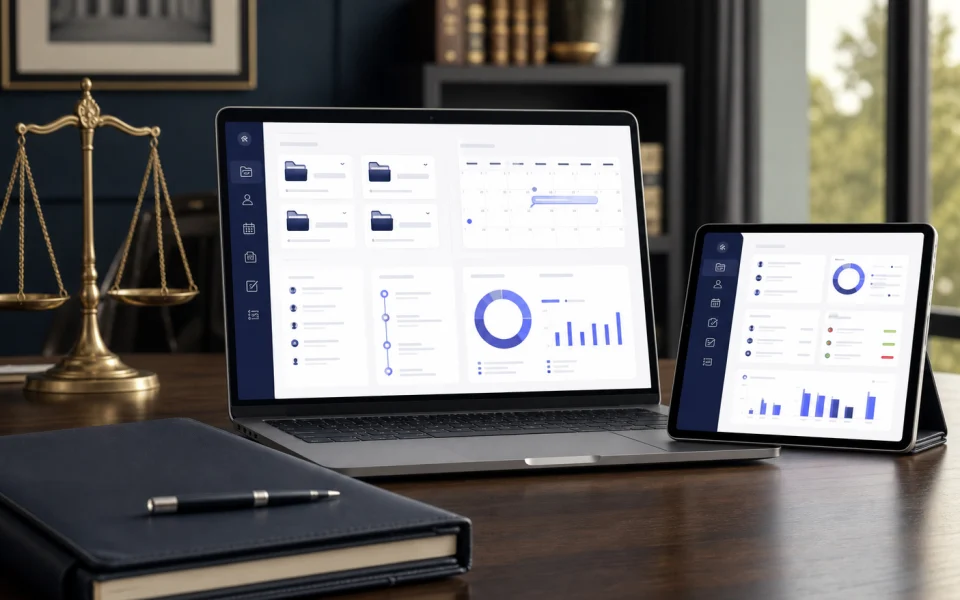
A partner sees firm-wide KPIs, active cases, what is listed this week and what is outstanding. An associate sees their assigned tasks with owners and due dates. A paralegal sees the work in front of them.
It is one dashboard, role-aware by design, with quick actions straight into any module — rather than four reports emailed on a Monday.
This is where revenue usually leaks. Tracked time becomes an invoice, and the invoice becomes a payment, inside the same system that holds the matter it belongs to.
Because outstanding invoices sit on the dashboard next to the cases they came from, the firm knows exactly what is owed and by whom — without a partner assembling it by hand at month end.
Licences, CLE credits and renewals are tracked by the system rather than by whoever remembered last year. Search runs across matters, so a precedent buried in a closed case from three years ago is findable.
None of this makes a firm win cases. It removes the administrative failure modes that have nothing to do with the law — the missed date, the unrecorded hour, the invoice raised six weeks late.
About this walkthrough. This describes how Advocate Pro works, using a representative example rather than a named client. Every step corresponds to a capability documented on the Advocate Pro page, and there are no performance figures here because those belong to individual clients rather than to the software.
Book a 45-minute walkthrough and we will open Advocate Pro live against how your team actually works — or tell you honestly if you do not need it yet.


